





Cashmere, wool and cotton
Caring for your knitwear
The sweater that is best for the planet is the one already hanging in your wardrobe, worn for one more winter.
That is not a figure of speech. According to WRAP, the UK's Waste and Resources Action Programme, extending the active life of a garment by just nine months cuts its carbon, water and waste footprints by roughly 20-30%. Nine months, not ten years.
And those nine months do not come from a better material. They come from how the piece is washed, dried and put away. That part is yours, which is why we have written it out properly.
How long a sweater lasts is decided in the wash
Knitwear does not wear out on your back: it wears out in the water. Washed well, it stays with you for years. Washed badly, it felts on the third wash, goes to the back of a drawer and from there into a bag. That is where fast fashion does the real damage — not in the sweater it makes, but in the habit of treating a sweater as something seasonal.
Two rules before you even turn on the tap. Don't wear the same piece two days running: leave twenty-four hours between wearings, so the fibres recover and pilling shows up much later. And wash it less than you think: wool and cashmere keep off odours and marks on their own, and an hour laid flat in the open air usually freshens a piece. Every wash you skip is fibre that is not stressed, water that is not used and energy that is not spent.
Cashmere and wool, by hand
First, the myth: cashmere does not need dry cleaning. Apart from heavily worked or embroidered pieces, it washes perfectly well at home.
Hand wash cool: a basin of lukewarm water, never above 30°C, with very little gentle wool detergent, a neutral soap or a few drops of baby shampoo. One piece at a time, inside out, letting it take up the water. Press gently: don't twist, rub or wring it, because that is what makes it felt. Never soak it for longer than five minutes, or the detergent starts working against the fibre and against the colour. Then rinse patiently, changing the water until it runs clear, always at the same temperature: sudden changes are what wool really cannot take.
No fabric softener. It flattens the fibre and wears the piece down over time. If you want softness, use a conditioner made for wool and cashmere, which opens the fibre out instead of crushing it.
Cashmere and wool, in the machine
Yes, you can, with four precautions. The piece goes in inside out, better still inside a mesh laundry bag — essential for scarves and pashminas, which otherwise get thrown about in the drum. Very little gentle wool detergent. The wool or delicate cycle at 30°C. And no spin: if your machine won't let you turn it off, set it to the lowest speed, four hundred rpm.
Drying, where most of the mistakes happen
Lay the piece on a dry towel and roll the two up together, pressing lightly: the towel takes the excess water and you never have to wring anything.
Then open the piece out, reshape it with your hands — collar, shoulders, sleeves — and let it dry flat, away from radiators and out of direct sun.
Never tumble dry. Heat and tumbling together are the recipe for felting: it is the quickest way there is to shrink a sweater by two sizes.
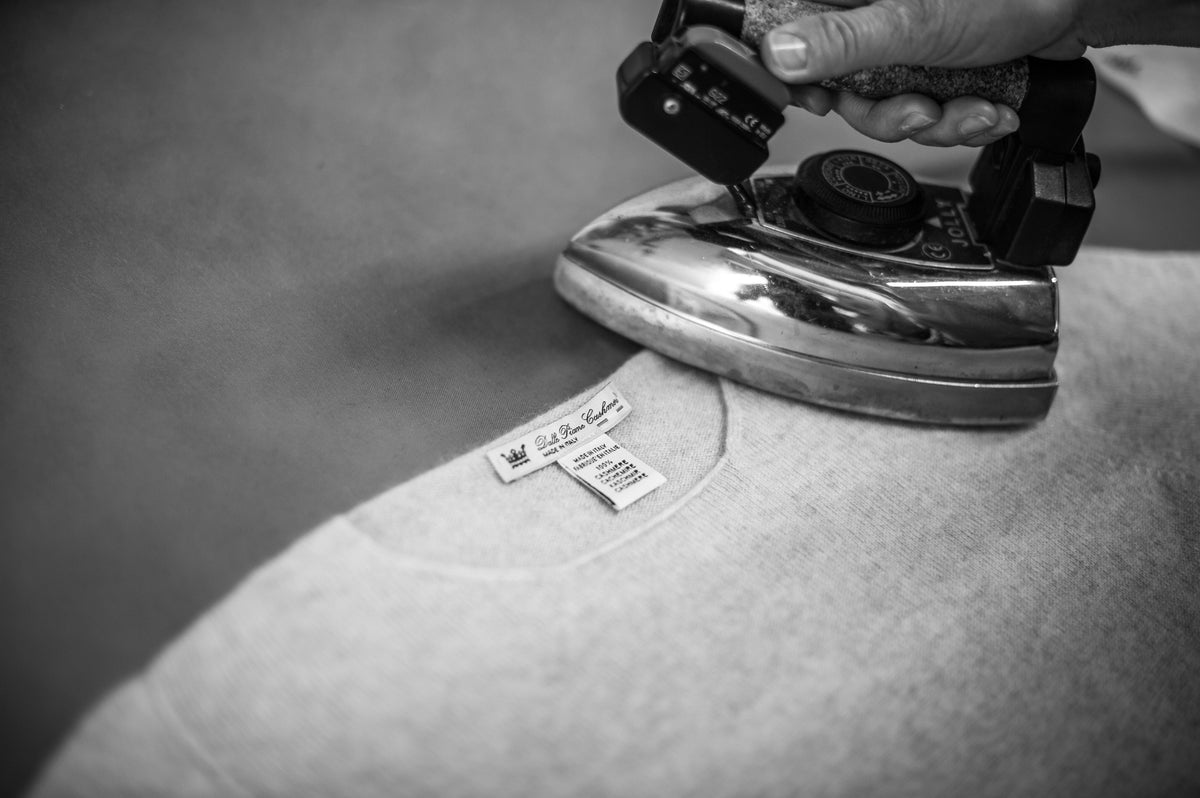
Pressing
If you washed and dried it as above, most of the time there is nothing to press.
If there is: piece inside out, iron on a low setting, and one of these two precautions, neither of which is optional — a burst of steam held 2" (5 cm) above the fabric, without setting the iron down, or a cotton cloth between the iron and the knit.
Let the piece cool before you fold it. Folded warm, it takes the crease and keeps it.
Pilling is not a defect
The little balls that turn up under the arms or along the sides are not a sign of poor cashmere: they come from friction. The shorter fibres work loose, rub against each other and roll up. It happens on every natural-fibre knit, and on the softest yarns — which are the finest ones — it happens sooner.
Take them off with a cashmere comb, drawn gently in the direction of the knit. Never a razor: on fine knitwear the risk of opening a hole is too high, and a hole is another matter.
Cotton
Our cotton pieces ask less of you, but they do have one trap: knitted cotton shrinks with heat, not with water.
Machine wash on the cotton cycle at 30°C, dry it on a drying rack and never tumble dry — the heat of the drum is exactly what shrinks the knit — and iron it slightly damp, which is far easier than ironing it dry.
When the season ends
Putting a piece away dirty is the surest way to find holes in it later: moths are not after the wool, they are after the traces of sweat and food left on it. So wash it, dry it properly and only then put it away.
Fold the piece in half lengthways, sleeves laid straight, without creasing it. Slip in a sheet of tissue paper against damp and put it in a cotton or plastic bag that is not airtight: it has to breathe. Add a natural moth repellent — cedar balls, sachets of cinnamon and cloves, cotton wool soaked in basil and mint oil — and refresh it every two or three months.
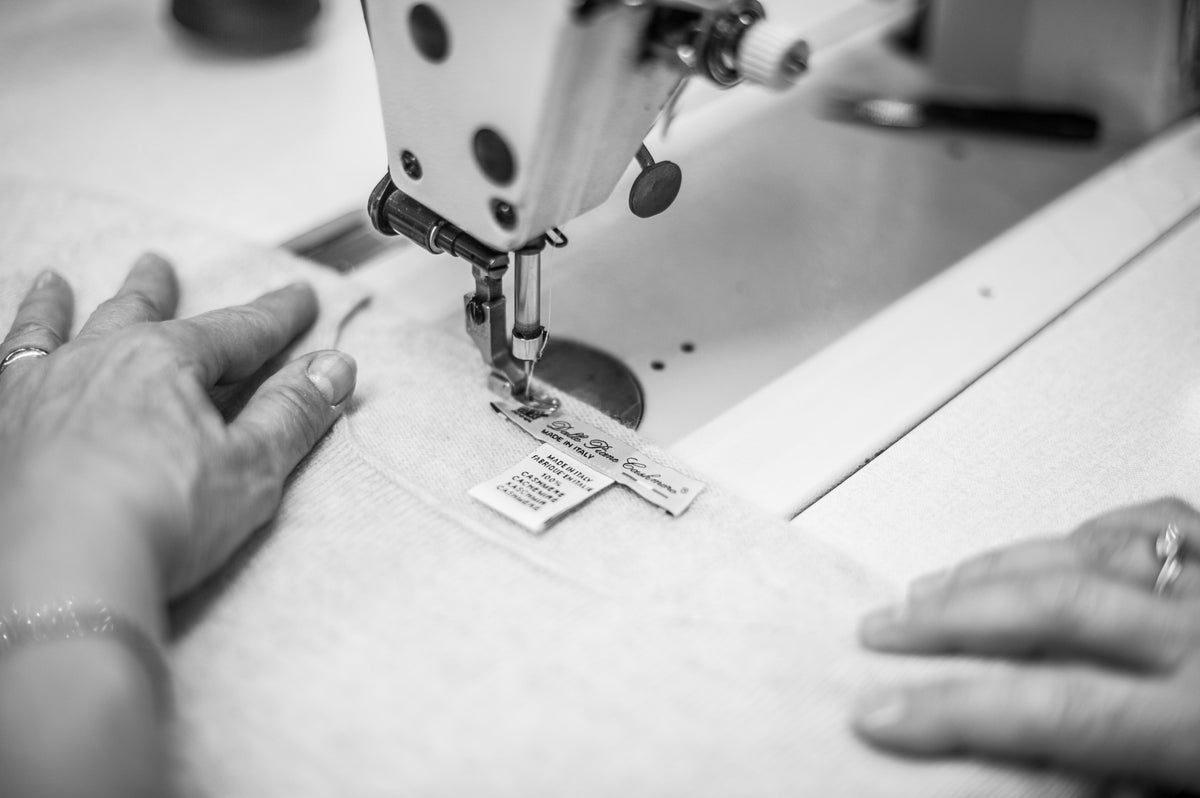
If the damage is already done
A pulled stitch, a seam that has opened, a small moth hole: none of it means the piece is finished. Knitwear is one continuous yarn, and that is exactly what makes it fixable — a dropped stitch can be picked back up, a seam can be closed along the line it was sewn on, and a hole the size of a pea can be darned so well that you have to know where to look.
What loses a piece is the drawer. Put away with a loop hanging, it pulls further; put away with a hole, the hole grows. So deal with it while it is still small: a knitwear repairer or a good tailor handles most of this kind of work. And if you are not sure what you are looking at, write to us with a couple of photos before you put the piece away. We'll tell you plainly what the damage is, whether it is the kind that disappears or the kind that will show, and what to ask for when you take it in.

Inside every parcel
Inside every parcel we send there is a printed folder with these same steps. It is not a leaflet of small-print warnings: it is the part of the purchase that decides how long what you bought will last.
All of it is also in our article How to wash cashmere.

100% Made in Italy
Yarn we select, knitted in our family's factory in Prato. Our factory