

Knitted in Tuscany
How we make it
We did not start doing this on a particular date, with a plan and an announcement. In Prato nothing has ever been thrown away: since the post-war years, the town's mills have made yarn out of rags — and anyone who grew up here takes that for granted.
What you will read below is not a campaign. It is how this town works, and it was in our family's company before our generation. And it is what we do now, not what we intend to do.

We make little and reorder often
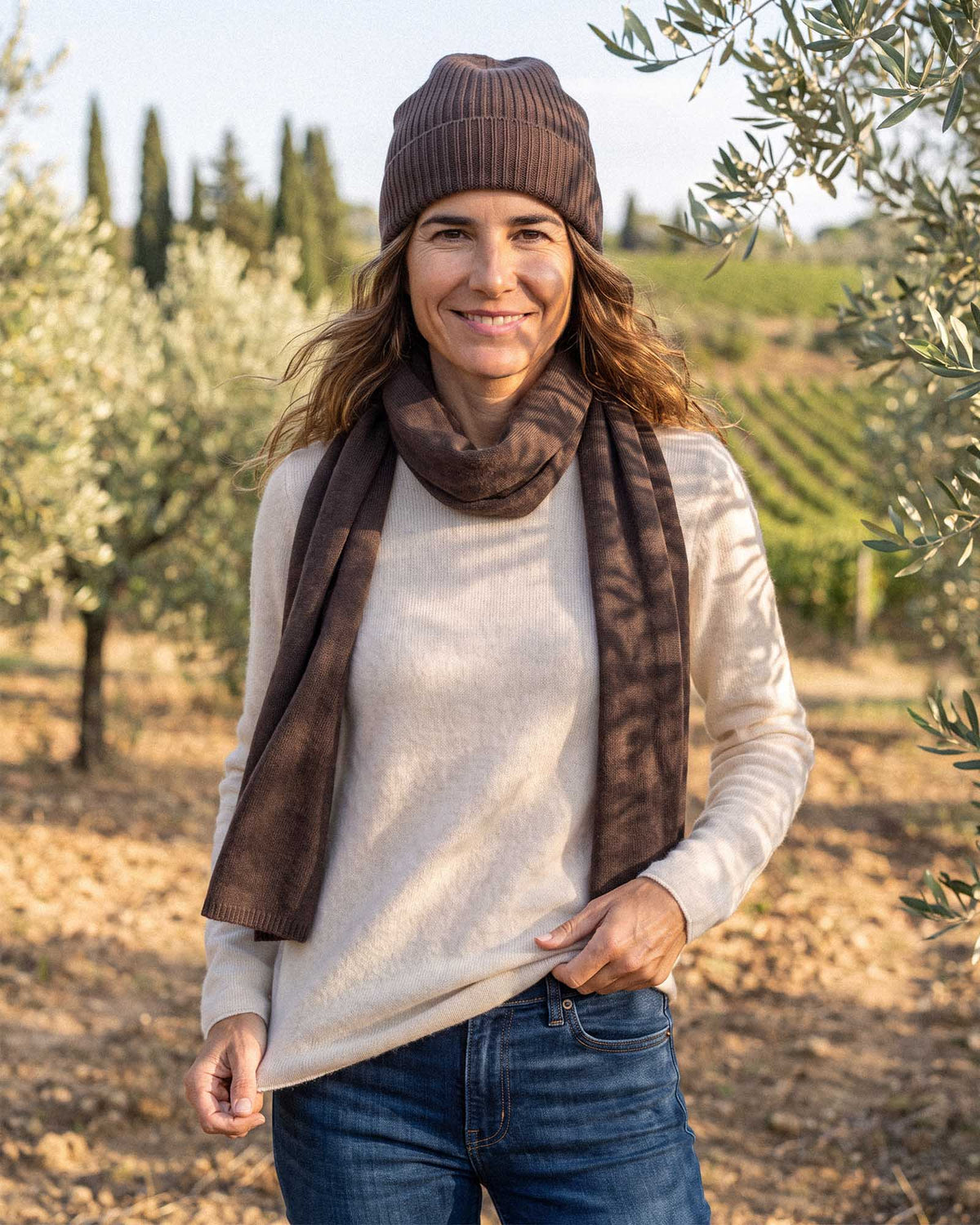
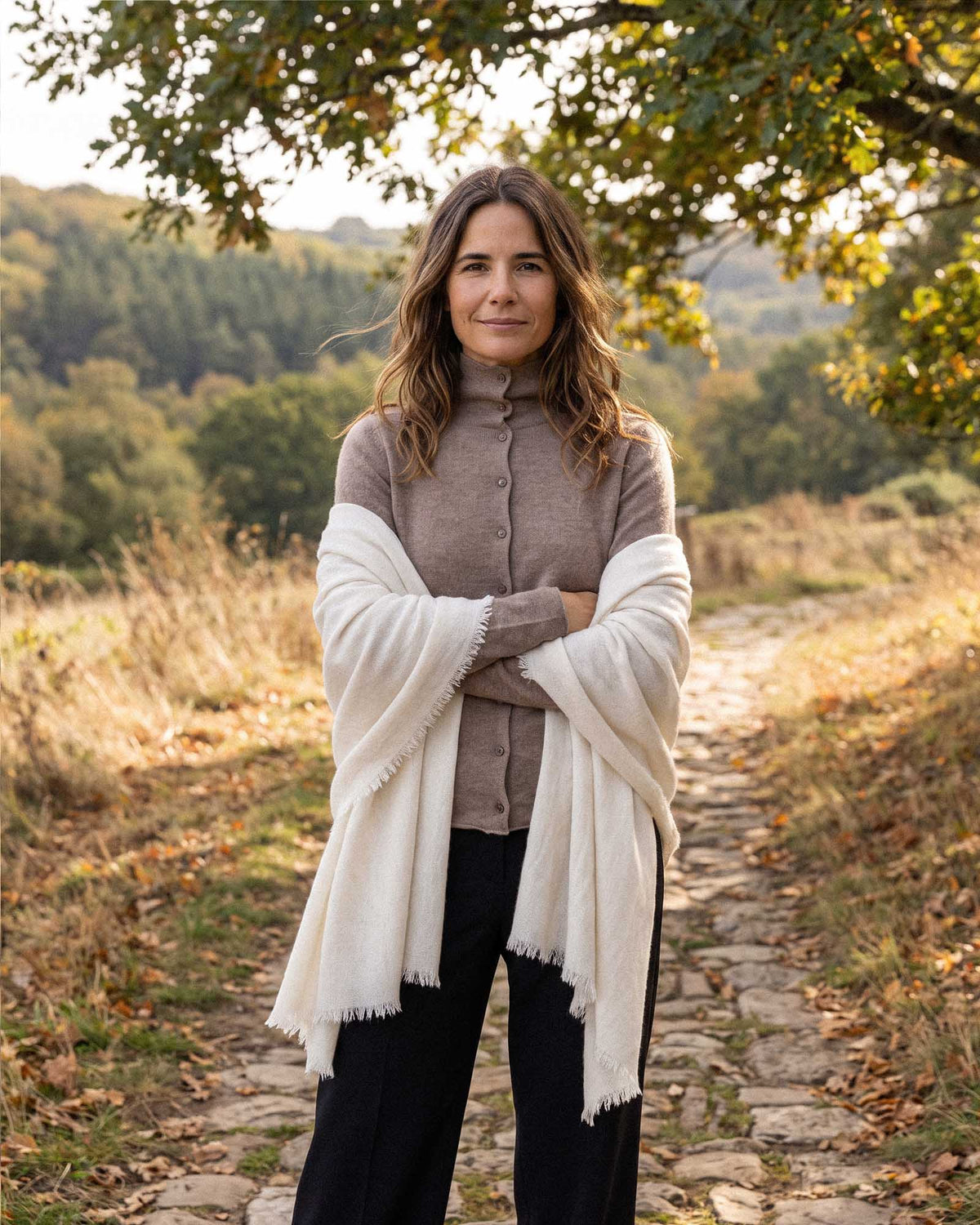
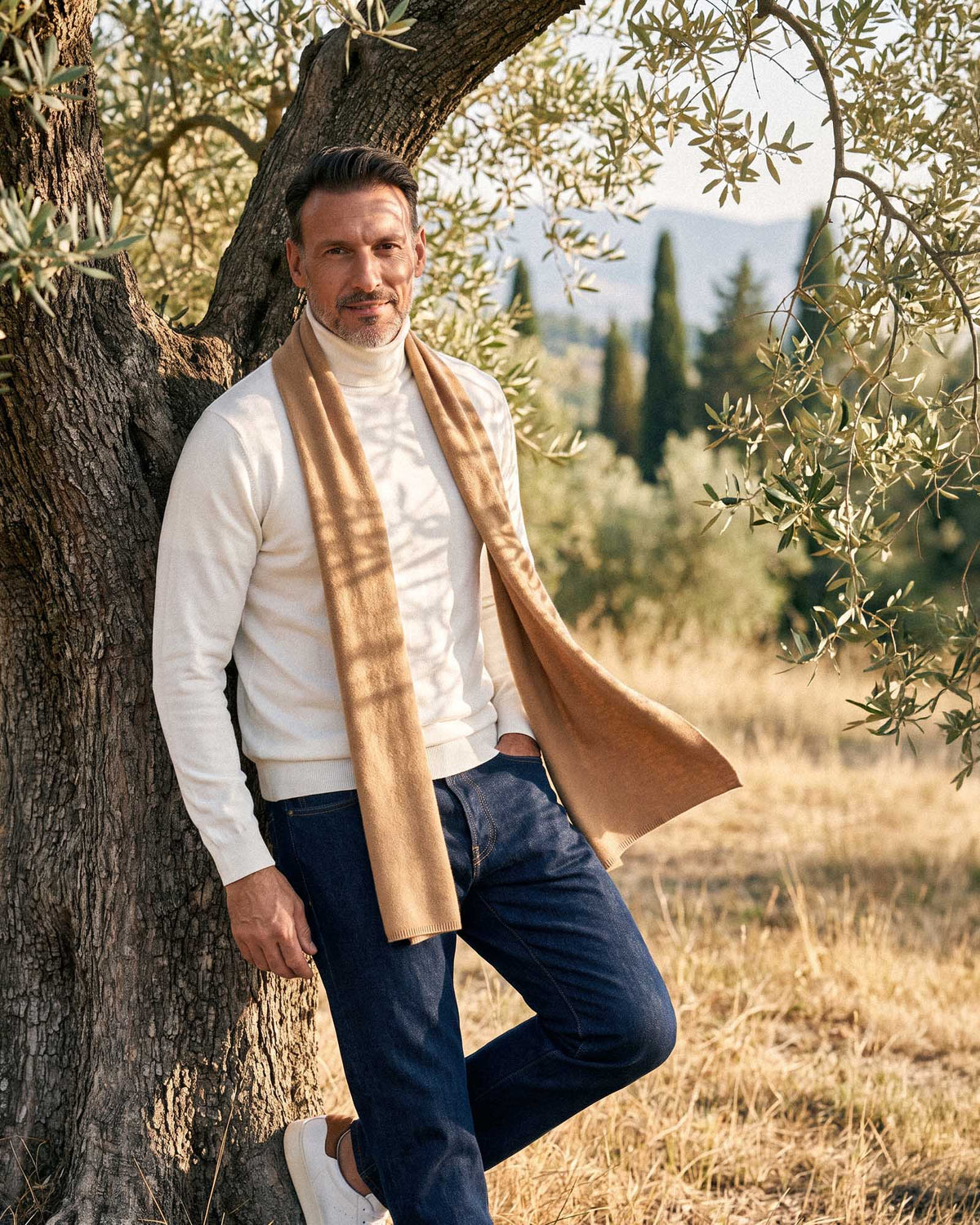
Our pieces are 100% Made in Italy, knitted in our family's factory in Prato, Tuscany. Making them close to home is not only a question of quality: it means we can look at a piece closely while it is being made, and keep working with the same people for years.
We make small runs and reorder often. No full warehouse, no whole collections left on our hands. For us that means less raw material wasted; for you it means a piece knitted recently and a price that does not swing: we do run discounts, but never beyond 20%, because we have no mountain of unsold stock to clear at half price.
Everything within a few miles
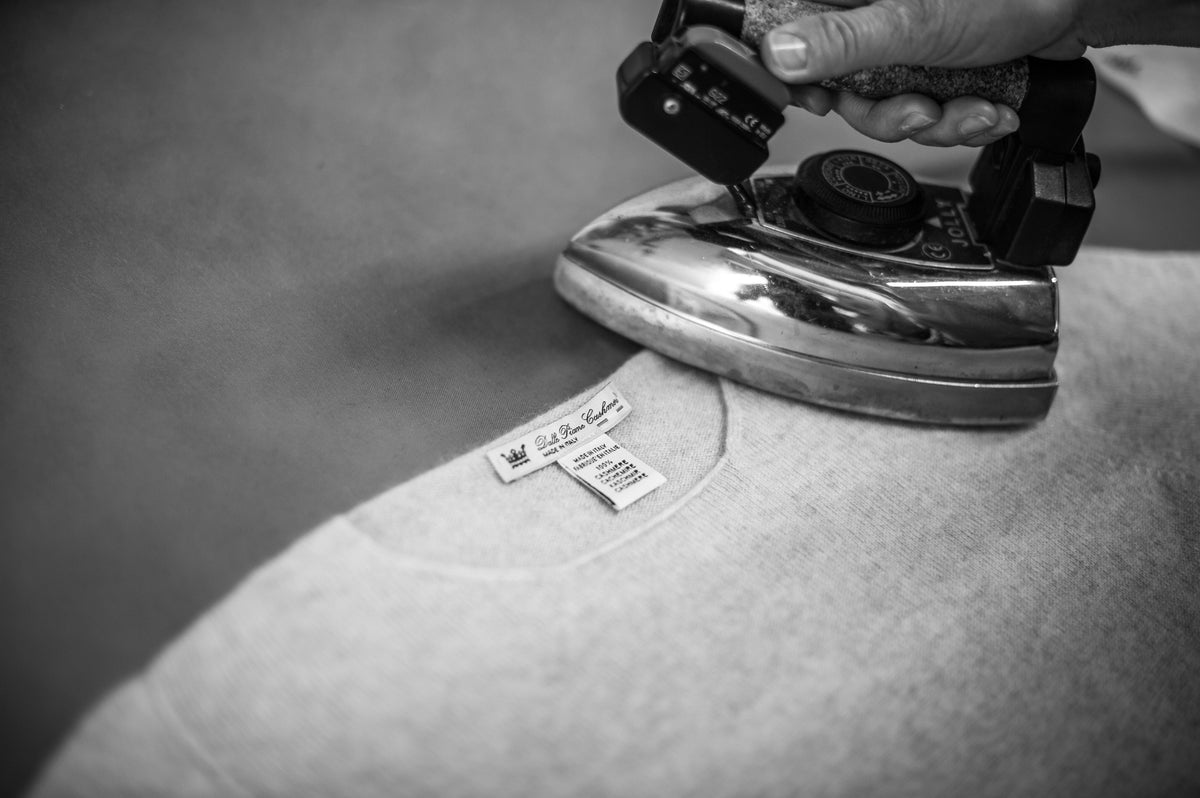
Part of our yarn is already in town when we order it: we buy from several spinning mills in Prato, and that is the case for the cotton, the blends and the recycled yarn. The rest arrives from outside. Either way, once the yarn is here it goes nowhere: knitted, hand-linked, finished and pressed, all in our own factory or by workshops inside the Tuscan textile district. Even the washing, the one stage we do not do ourselves, goes to a laundry a few miles away.
It is not a slogan about transport. It is that a piece does not circle the world three times before it is finished. And if something is not right, we can go and look at it in person the same morning, instead of writing an email and waiting.
What we do not claim is that the fibre comes from here, and we would rather say so ourselves. The raw material, recycled fibre included, arrives from all over the world, and virgin cashmere comes from the high plateaus of Asia, like all the cashmere in the world. What is Italian is the piece.
The nearly empty cones
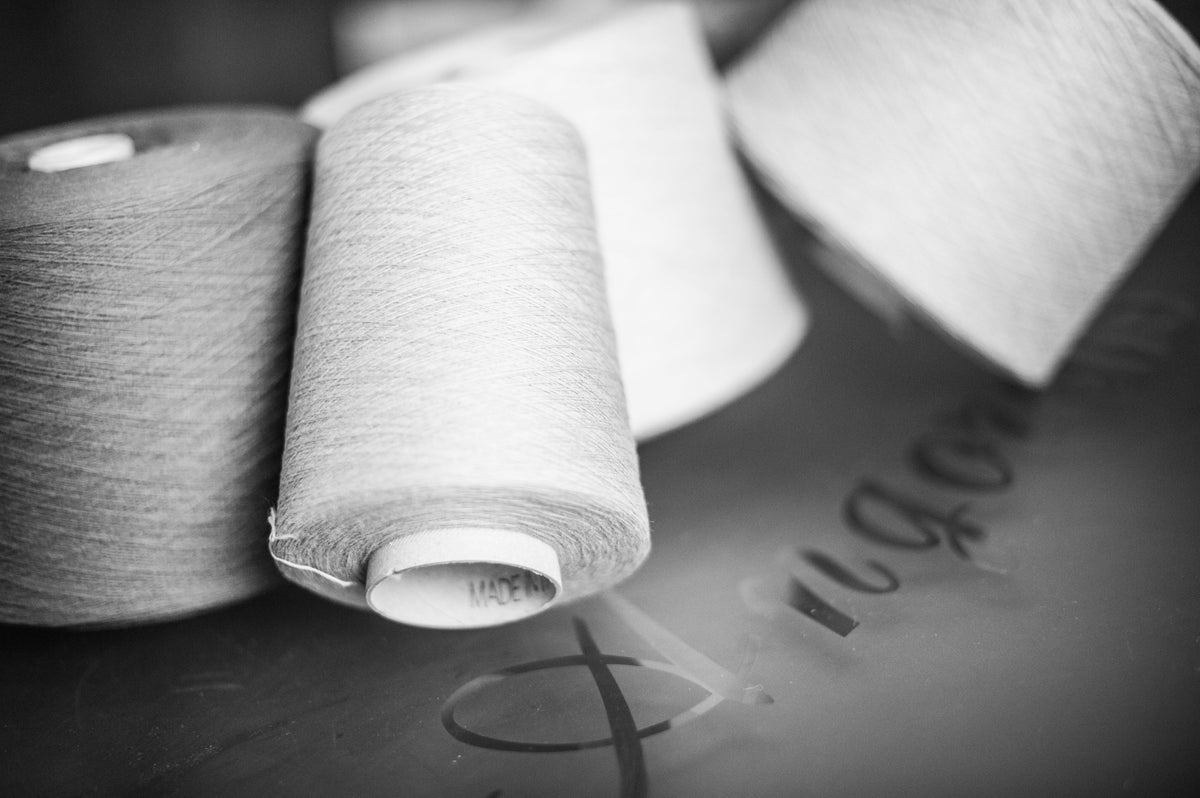
When a cone of yarn runs down there is always a little left at the bottom: too little to make a piece from, too much to be nothing. Throwing it out would be the easy thing.
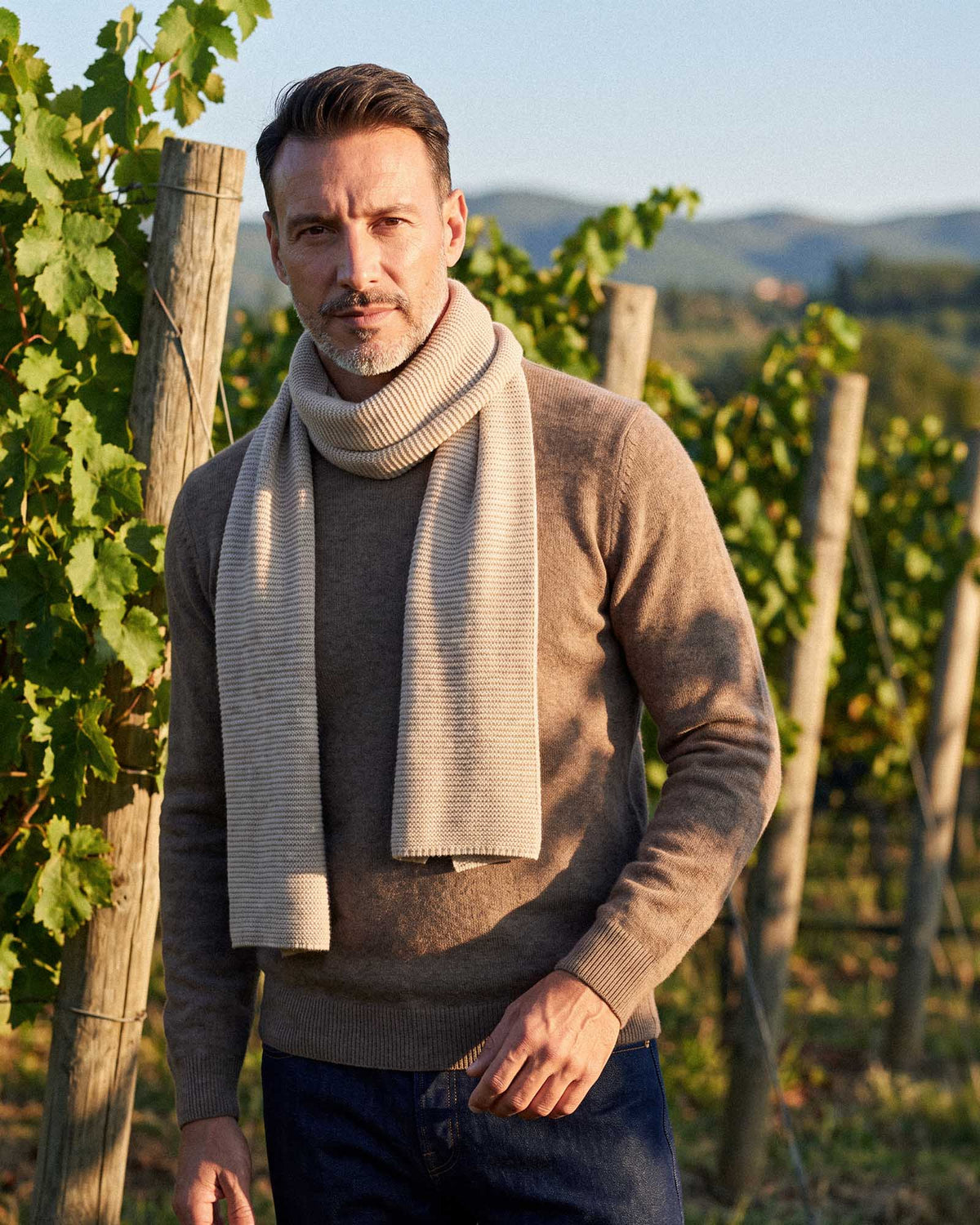
Instead it is where our striped scarves come from. Each stripe takes very little yarn, and a multi-stripe scarf is built by putting together the ends of different cones. It is not a clever idea: it is the way Prato has always worked, and it is the most concrete thing we do to avoid wasting yarn.
Washing instructions in every parcel
In every box we send, along with the piece, there is a printed card with all the steps on it. It is not the small print on the back of a label: it is the part of the purchase that decides how long what you have bought will last.
Hand wash cool, in lukewarm water with very little wool detergent or a few drops of baby shampoo. One piece at a time, inside out. Press gently — don't wring it, don't rub it. Never soak it for more than five minutes. Rinse patiently, and keep the water at the same temperature throughout.
Washing is what makes it last
A piece you keep wearing is worth more than any material we could choose — and what decides whether you keep it is not the yarn, it is the wash.
Hand wash cool, or use the wool or delicate cycle at 30°C. Press the water out with a towel, never wring. Dry flat, away from radiators and direct sun, and never tumble dry. Cared for this way, a cashmere sweater will last years. Washed hot or put through a fast spin, it felts on the third wash, goes to the back of a drawer and then into a bag.
That is where fast fashion does the real damage: not in the piece it makes, but in the habit of treating a sweater as something that belongs to one season.
The box
The box we send your order in is FSC certified: the board comes from responsibly managed forests. But what matters most is its shape.
It takes up no more room than an envelope, and it is rigid. Rigid means the piece does not have to be folded, and arrives the way it left. The footprint of an envelope means far less volume than a die-cut box — and in transport, volume is what really counts, because a van fills up with space long before it fills up with weight.
Delivery emissions
Every parcel that leaves here emits carbon. We cannot bring that to zero, but we can pay for its removal.
We use Planet, the Shopify programme that puts a share of every order towards companies that take carbon dioxide out of the atmosphere and store it. That is different from classic offsetting: there you fund a project so that carbon is not emitted, here you take out carbon that is already there.
It does not solve the problem, and we do not present it as though it did. It is what we can do now, on every order.


100% Made in Italy
Yarn we select, knitted in our family's factory in Prato. Our factory